Participa City has taken a deep dive into how racism and discrimination are experienced across five European countries – and the results draw a clear picture of where change is most urgently needed.
What we looked at
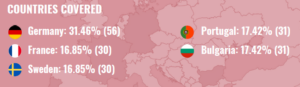
In all partner countries, surveys and interviews were carried out using shared questionnaires to explore key aspects of racism and discrimination in Bulgaria, France, Germany, Portugal and Sweden. The goal was twofold:
- to identify the main areas where ethnic and cultural minorities face exclusion,
- to understand which competences gatekeepers need in order to counter discrimination effectively.
The Transnational Analysis Report brings these national findings together, comparing patterns across the five countries and highlighting both overlaps and national specificities. Although the survey is not representative of the whole population, the results align with national statistics and show striking similarities between the countries.
Who is most affected – and where
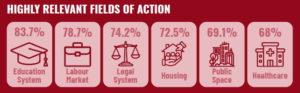
Across all five contexts, the analysis shows that Roma communities, people of African descent, Muslims (especially women wearing headscarves), and migrants and refugeesface the greatest barriers. These groups experience discrimination particularly in:
- Education
- Employment and the labour market
- Housing
- Public services and administration
- Policing and justice
Healthcare, public space and media/digital environments also emerge as important fields of exclusion in several countries. The report underlines that racism here is not just a matter of individual attitudes, but a systemic issue embedded in institutions, policies and everyday practices.
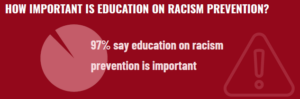
Check the Participa City Survey Infographic.
From evidence to learning: critical incidents
A cornerstone of the report is a collection of 60 documented “critical incidents” – real situations in which individuals perceived unequal treatment based on their ethnic or cultural background. These critical incidents will not stay on paper: they will serve as authentic learning material for the European simulation game and for competence-building activities in the project’s training course. Learners will be able to work with realistic scenarios and practice decision-making in situations where discrimination arises.
Why this matters for Participa City
The report confirms a strong common agenda across countries: priority action is needed in education, employment, housing, public services and policing, and gatekeepers need concrete skills to change how institutions work. This evidence base directly informs the design of the Participa City game and the two-step, competence-oriented training course, ensuring that both are grounded in real experiences and real needs.
The Transnational Context Analysis was coordinated by our Bulgarian partner Know&Can, who led this work package and ensured a shared methodology across all five countries.